
Best DSCR Lender for Co-Living in 2026-2027: Find the Right Fit
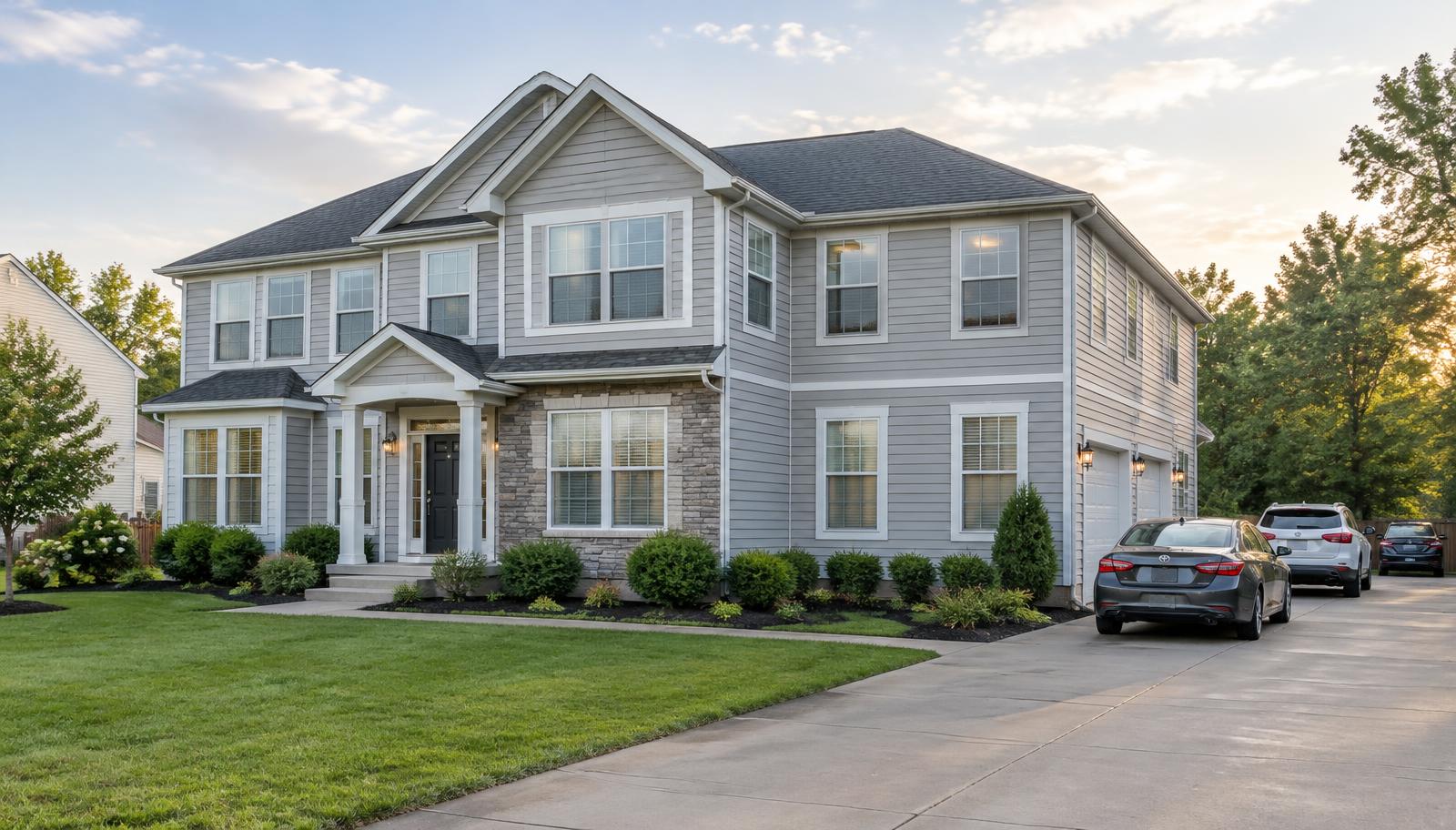
Co-living is one of the highest-yielding residential rental strategies available to investors right now. A four-bedroom house rented by the room at $800 per room generates $3,200/month. The same house rented as a single unit might bring $2,000. That delta is real money — and more investors are pursuing it.
The problem: most DSCR lenders have no idea what to do with it.
This article breaks down how co-living financing actually works in 2026-2027, what separates a lender that can close your deal from one that will waste three weeks of your time, and how to position your scenario correctly from day one.
What Is Co-Living, and Why Does It Create Financing Friction?
Co-living is a rental model where individual tenants rent private bedrooms in a shared home, typically with common areas — kitchen, living room, sometimes bathrooms — shared among residents. Each tenant has their own lease or room rental agreement.
Lenders flag co-living deals for several reasons:
- No single master lease. Conventional DSCR underwriting is built around a single lease or market rent appraisal. Multiple room-by-room agreements don't fit that model cleanly.
- No standard appraisal form. Appraisers don't always know how to comp a co-living property. They may default to standard single-family rental value, which dramatically understates income.
- Per-room income is hard to verify. Lenders that rely solely on lease income need documentation. Short operating histories or verbal rent arrangements create problems.
- Occupancy assumptions vary. Some lenders assume 100% occupancy for a single-tenant lease but will haircut co-living income heavily — sometimes to the point where your DSCR fails their threshold.
None of these are insurmountable. But they require a lender who has seen and closed co-living deals before — not one trying to force your deal into a single-family box.
The DSCR Formula, Applied to Co-Living
DSCR stands for Debt Service Coverage Ratio. The formula is straightforward:
DSCR = Gross Monthly Rental Income ÷ Total Monthly Debt Service (PITIA)
Where PITIA = Principal + Interest + Taxes + Insurance + HOA (if applicable).
Real example:
You're financing a five-bedroom co-living property. Four rooms rent at $900/month, one room at $750/month.
- Gross monthly income: (4 × $900) + $750 = $4,350/month
- PITIA on a $420,000 loan at 7.5% (30-year fixed): approximately $3,280/month
DSCR = $4,350 ÷ $3,280 = 1.33
Most DSCR lenders require a minimum of 1.0 to 1.25. At 1.33, this deal clears most thresholds — if the lender accepts co-living income at full value.
Here's where it breaks: if the lender's appraiser applies a single-family market rent of $2,200/month instead of the actual room-by-room income, your DSCR drops to $2,200 ÷ $3,280 = 0.67 — and you're declined before anyone looks at your credit.
Lender selection is underwriting selection. The appraiser your lender orders matters as much as the rate.
What to Look for in a DSCR Lender for Co-Living in 2026-2027
Experience with Non-Standard Rental Structures
Ask directly: "Have you closed a co-living deal in the last six months?" If the answer is hesitation, that's your answer. Lenders experienced with co-living understand how to document per-room income, how to instruct appraisers, and how to structure the file for underwriting approval.
Income Documentation Flexibility
The best co-living lenders will allow:
- Actual signed room rental agreements used as income documentation (not just a single master lease)
- Short-term operating history from platforms like Furnished Finder or direct leases, supported by bank statements
- Market rent appraisals that reflect per-room comparable rents rather than whole-house rentals
If a lender insists on a single executed lease for the whole property, they cannot close your co-living deal. Period.
DSCR Ratio Tolerance
Some lenders require 1.25 DSCR minimum. Others go as low as 1.0. A select few offer no-ratio DSCR products — useful when income documentation is complex or the property is in a lease-up phase. Co-living investors in year one of operating a property often benefit from no-ratio programs.
Property Type Eligibility
Co-living sits in a gray zone. Depending on configuration and zoning, the property may be classified as:
- Single-family (most common)
- 2–4 unit
- 5–8 unit (if multiple structures or configured as separate units)
Confirm early that your lender accepts the property classification your specific deal falls into. 2–8 unit multifamily DSCR financing opens different underwriting paths that may actually be more favorable for larger co-living configurations.
Rate Competitiveness for Specialty Deals
Specialty deals often come with specialty pricing — a lender premium for anything that doesn't fit their standard box. If you're working with a single-program direct lender, that premium is baked in because they're taking on "exception" risk. A broker with access to multiple lenders can find programs where co-living is a standard product, not an exception — and pricing reflects that.
Why Single-Program Lenders Are the Wrong Starting Point
Direct lenders — the ones with a single program and a rate sheet — are built for scale. They close high volumes of vanilla single-family DSCR deals efficiently. That's their business model.
Co-living is not vanilla.
When you approach a single-program lender with a co-living deal, one of three things happens:
- They decline immediately because it's outside their box.
- They try to make it work but apply conservative assumptions that tank your DSCR.
- They approve it at pricing that doesn't reflect the actual risk — because they're treating it as a non-standard exception.
None of these outcomes serve you.
The better approach is working with an independent broker who has relationships across 100+ DSCR lenders. The deal goes to the lenders whose programs are designed for co-living, not the ones trying to adapt.
At DSCR.capital, that's the model. Your scenario is reviewed and matched to lenders who already close deals like yours — not pitched through a funnel designed for cookie-cutter SFR investors.
This is also why, if you're cross-shopping DSCR loans for short-term rentals or building a portfolio, broker access matters at every stage of deal complexity.
How to Structure Your Co-Living Deal for Maximum Lender Approval
Before you submit a scenario, have these ready:
1. Documented room rental income
Signed leases for each room, or a 12-month bank statement trail showing consistent rent deposits. If you're acquiring a turnkey co-living property, get room-level leases transferred at closing.
2. Operating expense breakdown
Co-living properties have higher management and maintenance costs than single-family rentals. Lenders underwriting DSCR on net income (some programs do) need to see realistic expense assumptions.
3. Photos and floor plan
Underwriters need to confirm the bedroom count and configuration. A clear floor plan showing individual bedrooms with locking doors and shared common areas supports the co-living income model.
4. Zoning confirmation
Some municipalities restrict co-living or require special permits. Have your zoning documentation ready. Lenders will flag this if it's not addressed upfront.
5. Property management documentation
If you're using a property manager, a management agreement showing PM fees and tenant placement history strengthens the file.
The more completely you document the deal before shopping it, the faster the right lender can move.
FAQ
Is co-living considered a short-term or long-term rental for DSCR purposes?
It depends on lease structure. Month-to-month room rentals in a furnished co-living property may be treated as short-term rental income by some lenders, requiring AirDNA or platform data to support income. Year-long room leases are typically treated as long-term residential rental income. The distinction matters because some DSCR programs exclude STR income entirely. Confirm this with your lender before submitting.
What minimum DSCR is required for a co-living property?
Most programs require between 1.0 and 1.25. Some lenders offering no-ratio products waive the DSCR requirement entirely in exchange for a slightly higher rate. For co-living investors still in lease-up, no-ratio programs are worth evaluating — particularly if you have strong reserves and credit.
Can I use projected rental income if I'm buying a co-living property that isn't yet operating?
Some lenders accept projected co-living income based on a market rent appraisal that reflects per-room comparable rents. Others require documented operating history. No-ratio programs sidestep this entirely. If the property is vacant at acquisition, your broker needs to route your deal to lenders who specifically allow projected income on specialty rental structures.
Does DSCR.capital work with first-time co-living investors?
Yes. DSCR loans are asset-based, not income-based. Your personal income and employment history don't factor into approval. What matters is the property's income coverage ratio, your credit score (most lenders require 660+), and your down payment. First-time co-living investors with strong properties close deals regularly through the broker model.
The Bottom Line
Co-living is a legitimate, high-yield investment strategy — and it's growing. The financing friction is real, but it's solvable with the right lender match. The mistake most investors make is starting with a direct lender that doesn't specialize in co-living and spending weeks trying to make a square peg fit a round hole.
Start with a broker who has already solved this problem across dozens of lenders. Submit your scenario, get it matched to the right program, and move.
Submit your co-living deal for review at dscr.capital/review

Alex Seri
DSCR Lending Specialist · DSCR.Capital
I close DSCR loans every week for real estate investors nationwide. If you've got a deal, I want to hear about it.