
DSCR No Seasoning Loan: Close and Cash Out Immediately
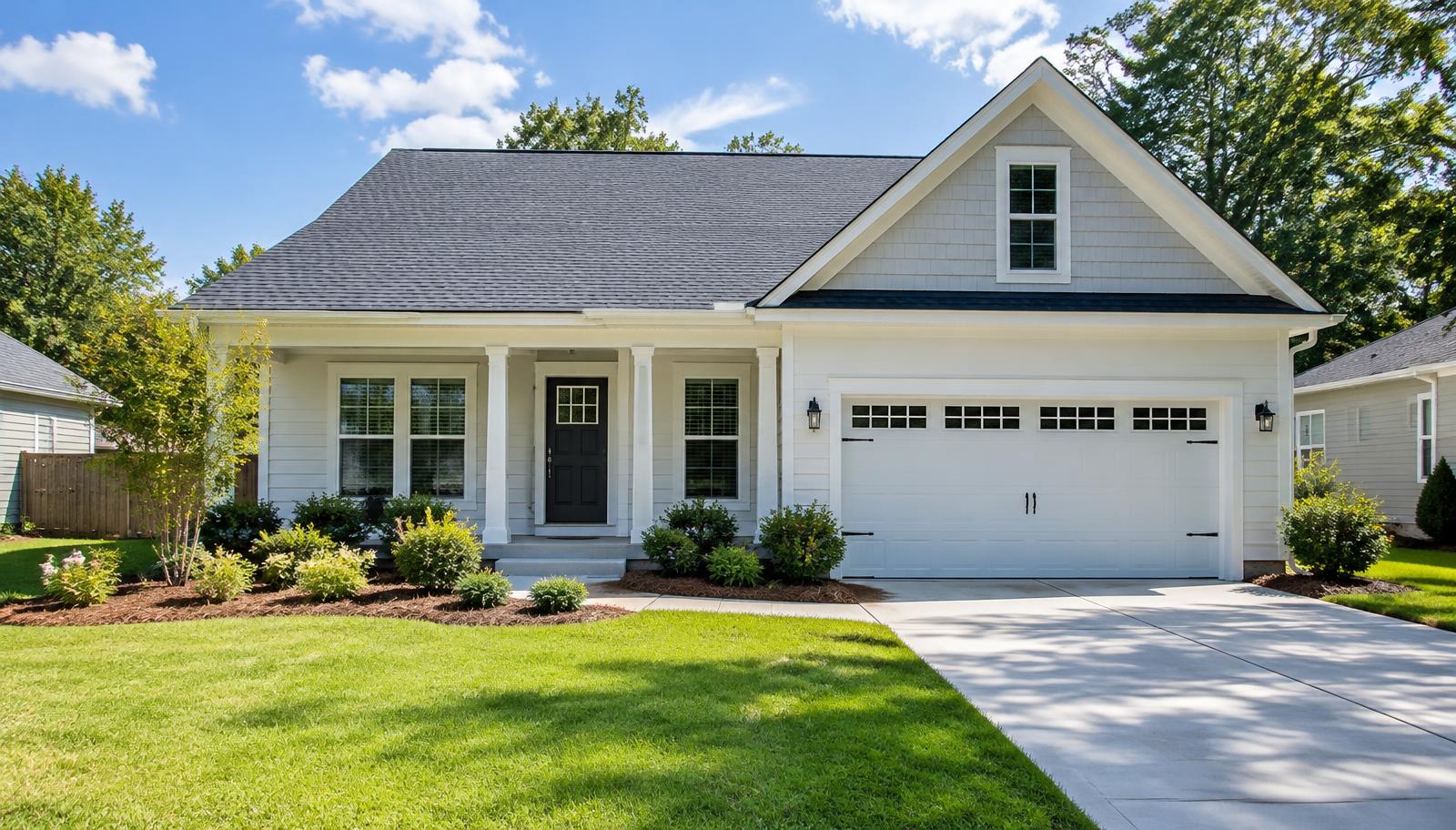
You found the deal, negotiated hard, closed fast — maybe with cash or a hard money bridge. Now you want your equity back so you can move on to the next property. The problem: most DSCR lenders require you to own the property for six to twelve months before they'll let you touch it. That seasoning requirement quietly kills velocity for serious investors.
A DSCR no seasoning loan removes that waiting period entirely. You can refinance the day after closing — or in some cases, the day of closing — and pull cash out based on the property's current appraised value, not what you paid for it.
This article breaks down exactly how no-seasoning DSCR cash-out works, which deals qualify, how lenders structure the math, and where the real traps are.
What Is a DSCR No Seasoning Loan?
A standard DSCR cash-out refinance requires title seasoning — you must have owned the property for a defined period before a lender will underwrite a cash-out. The most common thresholds are six months and twelve months. Some lenders apply this regardless of how much equity you have or how strong the deal is.
A no-seasoning DSCR loan waives that waiting period. The lender underwrites based on:
- A current, full appraisal (not your purchase price)
- The property's debt service coverage ratio
- Your credit profile and entity structure
There is no lookback at how long you've owned it.
This matters most in three scenarios:
Cash buyers who closed without financing and need to recapitalize. Every month sitting with cash tied up in a property is a month you're not deploying it elsewhere.
Hard money exits where you're refinancing a short-term bridge loan into permanent DSCR debt. Hard money is expensive — getting to DSCR fast saves thousands.
Buy-rehab-rent investors who finished a light rehab and want to pull equity before the six-month clock runs out on a conventional rental program.
How the DSCR Formula Works — And Why It Governs the Loan Amount
DSCR stands for Debt Service Coverage Ratio. It measures whether the property's income covers its debt payments.
Formula:
DSCR = Gross Monthly Rent ÷ Monthly PITIA
PITIA = Principal + Interest + Taxes + Insurance + Association dues (if applicable).
Real example:
A single-family rental in the Carolinas appraises at $420,000. Current market rent is $2,800/month. You're refinancing at 75% LTV, which gives you a $315,000 loan. At a 7.25% rate on a 30-year amortization, the monthly P&I is approximately $2,149. Add $320 for taxes and $120 for insurance. PITIA = $2,589.
DSCR = $2,800 ÷ $2,589 = 1.08
That's above 1.0, which means income covers the payment. Most DSCR lenders want a minimum of 1.0 to 1.25 depending on their program. Some go as low as 0.75 for investors who can document strong reserves or accept a rate premium.
The no-seasoning piece changes the numerator and the denominator relative to a purchase loan: you're refinancing at current value, and the rental income is already in place. That's actually cleaner underwriting than a purchase in many cases.
LTV Limits for No-Seasoning DSCR Cash-Out
This is where no-seasoning programs differ meaningfully from standard DSCR cash-out. Because there's no seasoning, lenders typically cap LTV more conservatively.
Typical ranges:
| Property Type | Standard DSCR Cash-Out LTV | No-Seasoning LTV |
|---|---|---|
| SFR (1 unit) | 75–80% | 65–75% |
| 2–4 unit | 70–75% | 65–70% |
| 5–8 unit multifamily | 65–70% | 60–65% |
| Short-term rental (STR) | 70–75% | 65–70% |
The spread is roughly five to ten points lower on the no-seasoning side. Some lenders will go higher with stronger DSCR or higher credit scores. A 740+ FICO with a 1.25+ DSCR on a single-family often unlocks 75% LTV even with no seasoning.
Maximum cash-out amounts vary. Some programs cap at $500K cash-out. Others are uncapped on the cash-out amount as long as the LTV holds.
What Lenders Are Actually Looking At
Credit Score
Minimum 620 is common, but no-seasoning cash-out is a specialty product. Below 680, your options thin significantly and your rate premium increases. At 700+, you're competitive. At 740+, you're accessing the best LTV and rate combinations.
DSCR Threshold
The minimum ratio a lender accepts determines whether the deal works at a given loan amount. If the numbers produce a 0.90 DSCR and the lender floors at 1.0, you either need a lower loan amount or a lender with a sub-1.0 program. Both options exist in the market.
Appraisal
No-seasoning programs rely entirely on the appraisal to set the loan amount. Some lenders require a full 1004/1025 appraisal. Others will accept a desk review or AVM for refinances under a certain loan threshold. Appraisal quality matters — a weak comparable set can crater your loan amount.
Entity vs. Personal
Most DSCR no-seasoning programs work with LLCs, corporations, and other entities. Some lenders require entity ownership; others allow personal ownership. If you bought in your own name and want to close in an LLC, coordinate early — some programs require the title to match at closing.
Short-Term Rentals
STR income on a no-seasoning cash-out is underwritten differently. Lenders who accept STR income typically use a 12-month trailing revenue average from Airbnb/VRBO statements or third-party market data tools. Properties with less than 12 months of STR history often default to long-term market rent for underwriting purposes, which can reduce the qualifying income significantly.
Where Most Investors Get Tripped Up
Assuming any DSCR lender can do it. Most single-program lenders have explicit title seasoning requirements baked into their guidelines. They cannot make exceptions. If their program requires six months, that's the rule — for everyone.
Confusing delayed financing with no-seasoning cash-out. Delayed financing is a specific Fannie Mae conventional provision. It lets you refinance a recently purchased property at the purchase price — not appraised value — with no seasoning, but only if you paid cash and meet specific documentation requirements. That's not the same as DSCR no-seasoning, which is an investor product with its own underwriting rules and no conforming loan limit constraints.
Underestimating the rate premium. No-seasoning DSCR cash-out typically carries a rate adjustment of 0.25–0.75% above a standard seasoned DSCR cash-out. That's the market pricing the added risk of no ownership history. Budget for it.
Not having the appraisal support the value you assumed. If you bought a property at below-market value and your equity thesis depends on an appraisal coming in at market, that appraisal needs to happen before you commit to a closing timeline.
How DSCR.capital Approaches No-Seasoning Scenarios
Single-program lenders have one set of guidelines. When their program doesn't accommodate no seasoning at the LTV you need, the answer is no.
At DSCR.capital, no seasoning scenarios go to a matrix of 100+ lenders simultaneously. The question isn't "does our program allow this?" It's "which of the programs in this network gives this borrower the best rate, LTV, and terms for this specific property type, DSCR, and credit profile?"
That distinction matters more in specialty scenarios than in standard ones. A vanilla 75% LTV DSCR purchase on a single-family with a 740 FICO qualifies almost everywhere. A no-seasoning cash-out at 70% LTV on a recently completed light rehab in a secondary market is a scenario where lender selection is the difference between a funded deal and a dead end.
Borrowers work with one point of contact. The deal shops across the network. You see competitive options, not a single take-it-or-leave-it quote.
FAQ
What is the minimum time you need to own a property before doing a DSCR no-seasoning cash-out?
There is no minimum with true no-seasoning programs. Some investors close on a property Monday and fund the cash-out refinance the same week. The limiting factor is the appraisal turnaround time, not an ownership seasoning period. That said, programs vary — some technically allow no seasoning but still require 30–60 days of ownership in practice due to underwriting review timelines.
Does the no-seasoning cash-out loan amount use purchase price or appraised value?
Appraised value. This is the core advantage. If you purchased a property at $300,000 and it appraises at $380,000 — due to below-market acquisition, forced appreciation from rehab, or market movement — the loan is sized off $380,000. That's why investors actively seek no-seasoning programs after value-add deals.
Can I do a DSCR no-seasoning cash-out on a short-term rental?
Yes, but income documentation is the variable. If the property has a 12-month track record on STR platforms, most STR-friendly DSCR lenders will underwrite to actual gross rents. Less than 12 months of history typically means the lender falls back to long-term market rent for qualification, which may reduce what you can pull out. Structure your deal assumptions accordingly.
Are no-seasoning DSCR loans available for multi-unit properties?
Yes. Two- to eight-unit properties are generally eligible, though LTV caps are tighter than single-family. A four-unit no-seasoning cash-out typically tops at 65–70% LTV. Eight-unit properties fall into the commercial DSCR tier and are underwritten differently, often with additional reserves requirements and a formal rent roll.
Get Your No-Seasoning Scenario Reviewed
If you have a property you want to cash out of without waiting, submit the deal details at dscr.capital/review. Turnaround is fast — most scenarios get initial feedback within one business day. No obligation, no credit pull to see what's possible.

Alex Seri
DSCR Lending Specialist · DSCR.Capital
I close DSCR loans every week for real estate investors nationwide. If you've got a deal, I want to hear about it.