
DSCR Loan Multifamily Investment Property: Investor's Guide
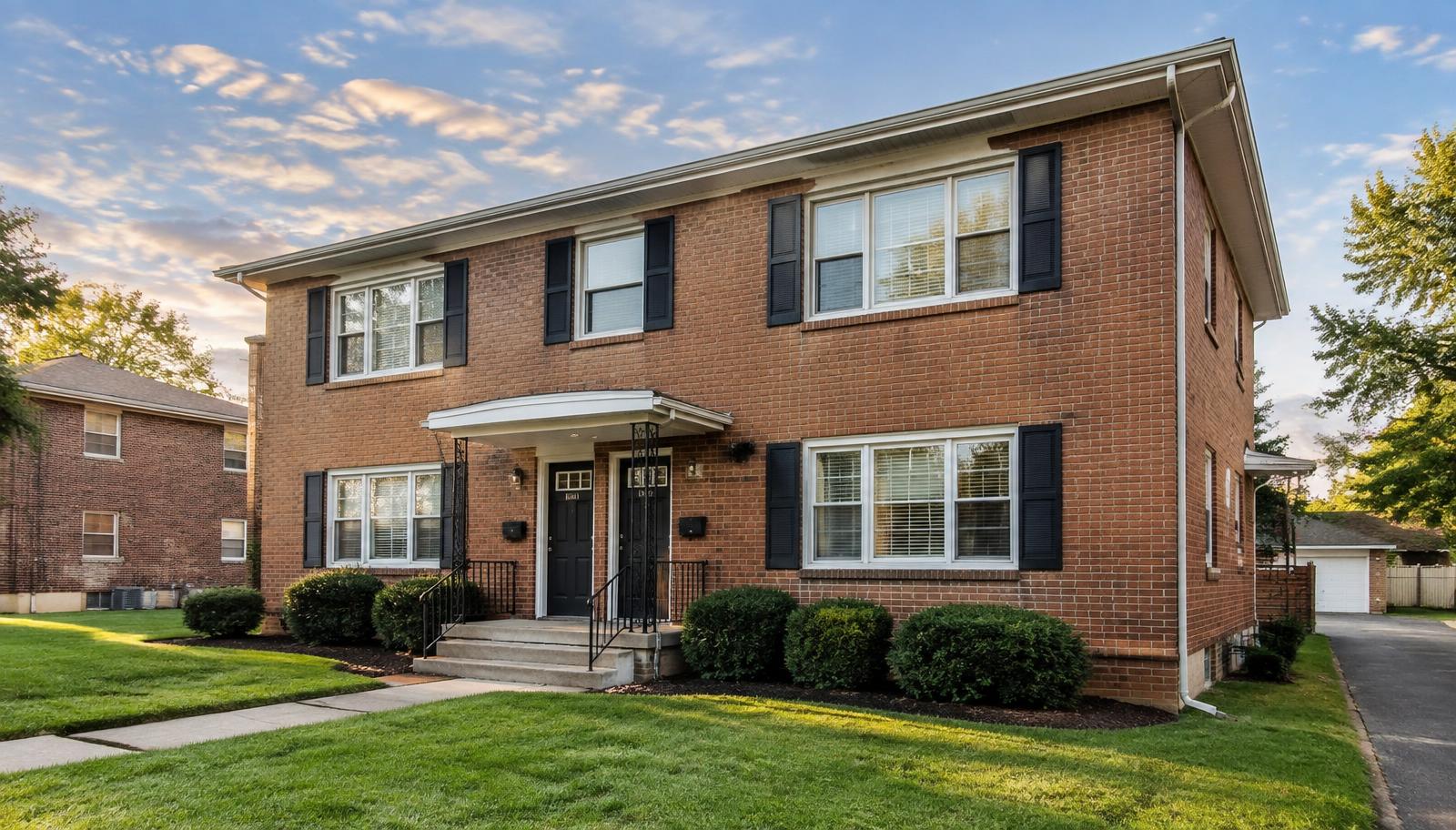
What a DSCR Loan Actually Is — and Why Multifamily Changes the Equation
A DSCR loan qualifies you based on the income your property generates, not on your personal tax returns, W-2s, or employment history. The lender looks at one core question: does this property cover its debt?
That matters for multifamily specifically because a 4-unit building generating $6,800/month in rent operates under a completely different risk profile than a single-family rental at $1,800/month. More units means more income streams, more resilience against vacancy, and often better debt service coverage. The property makes a stronger case for itself — if you structure the deal correctly.
DSCR loans for 2–8 unit multifamily properties fall into a specific lending category that's distinct from both single-family DSCR and commercial multifamily (which typically starts at 5+ units with agency or bank financing). The 2–8 unit space is where DSCR lenders are most active, and where borrower options vary dramatically depending on which lender's program you're looking at.
The DSCR Formula: How Lenders Calculate It for Multifamily
The formula is straightforward:
DSCR = Gross Rental Income ÷ Total Monthly Debt Service
"Total monthly debt service" includes principal, interest, taxes, insurance, and HOA if applicable — the full PITIA payment, not just the mortgage principal and interest.
Real Example — 4-Unit Property:
- Gross monthly rent: $6,400 (4 units × $1,600)
- PITIA payment: $4,850
- DSCR: $6,400 ÷ $4,850 = 1.32
A 1.32 DSCR means the property generates 32% more income than it costs to carry. Most DSCR lenders want to see at least 1.0, with many requiring 1.20–1.25 for stronger rate pricing. Some programs will go as low as 0.75 DSCR with compensating factors — credit score, down payment, reserves — but you'll pay a pricing premium for it.
For multifamily, some lenders use a vacancy adjustment before calculating DSCR, typically discounting gross rent by 5–10%. Others use actual lease income. Know which method your lender applies — it directly affects whether your deal clears their minimum.
2–8 Unit vs. 5+ Unit: Why the Distinction Matters
Properties with 2–4 units are treated as residential under most DSCR programs. Properties with 5–8 units tip into commercial residential territory, and not all DSCR lenders go there.
For 2–4 unit properties, underwriting follows a residential framework: credit score, LTV, DSCR ratio, and property condition. The lender pool is wide.
For 5–8 unit properties, lenders often require:
- Higher minimum loan amounts (commonly $150K–$300K floor)
- Lower maximum LTV (65–70% is common vs. 70–80% for 2–4 unit)
- Stronger DSCR thresholds
- Rent rolls and lease documentation for every unit
If you're financing a 6-unit building, you may get declined by lenders who only go to 4 units — even if your DSCR is 1.40. This isn't a credit problem. It's a product availability problem. The right lender for that deal is one who actually builds 5–8 unit multifamily into their program, not one who treats it as an exception.
Key Qualification Criteria Across Multifamily DSCR Programs
While every lender structures their program differently, these are the variables that consistently determine approval, rate, and terms:
Credit Score
Most programs have a minimum of 620, but pricing improves significantly at 680, 720, and 740+. On a multifamily deal with a higher loan amount, the difference between a 680 and 740 score can move the rate 50–75 basis points.
Loan-to-Value (LTV)
- Purchase: 70–80% LTV on 2–4 units; 65–75% on 5–8 units
- Cash-out refinance: typically 70–75% max
- Rate/term refinance: can go slightly higher
Loan Amount
DSCR loans start around $75,000 at the low end and run to $5M+ through portfolio programs. Multifamily deals often require higher minimums due to complexity. If you're below a lender's floor, you need a lender with lower minimums — not a lender with looser standards.
Property Condition
The property must be rentable and in working condition. Major deferred maintenance, uninhabitable units, or significant code issues typically disqualify a property until repairs are completed. This is where bridge-to-DSCR strategies come in.
Reserves
Lenders generally want 3–6 months of PITIA in reserves post-close for multifamily. Some require more, especially for 5–8 unit deals. These can often be held across multiple accounts.
Borrower Entity
Many investors buy multifamily through an LLC for liability protection. DSCR lenders accommodate this — in fact, most are set up for it. Make sure your entity is properly formed and that the loan is being structured correctly for asset protection purposes.
Rate and Pricing: What Drives Your Multifamily DSCR Rate
DSCR loans price higher than conventional owner-occupied mortgages. For multifamily specifically, rates are influenced by:
- Unit count: 5–8 unit properties typically carry a rate premium over 2–4 unit
- DSCR ratio: Higher DSCR often means better pricing; sub-1.0 DSCR deals price higher
- LTV: Lower LTV = lower rate. 65% LTV performs better than 75%
- Credit score: As above — the score bands materially affect pricing
- Loan term and amortization: 30-year fixed, 5/1 ARM, 7/1 ARM, and interest-only options all exist; each has different pricing
- Prepayment penalty: Longer prepayment periods (3-year, 5-year step-downs) are standard; some lenders offer shorter penalties at a rate cost
Interest-only options are available through many DSCR lenders and can meaningfully improve your cash-on-cash return in the early years — and improve your DSCR on the same property since the debt service denominator drops.
Why Lender Selection Is the Most Important Variable in a Multifamily DSCR Deal
A single-program lender has one set of guidelines. If your 6-unit deal doesn't fit — wrong LTV, wrong DSCR, wrong market, wrong entity structure — there's no internal alternative. You get a decline.
An independent broker working across 100+ DSCR lenders approaches the same deal differently. The question isn't "does this fit our box?" It's "which lender's box is the right fit for this specific deal?"
Multifamily DSCR deals have enough moving pieces — unit count, mixed-use considerations, short-term rental income treatment, portfolio loan eligibility — that finding the right lender often determines whether a deal closes at all, and at what terms.
At DSCR.capital, the approach is to take your specific scenario — property type, location, unit count, income, financing goal — and match it to the lenders most likely to price it competitively. Your deal goes shopping across the market rather than being evaluated against one lender's rigid program. As a borrower, that's the position you want to be in.
If you're also weighing a cash-out refinance on a rental property to pull equity from an existing multifamily asset, the same logic applies — lender selection drives the outcome.
Frequently Asked Questions
Can I use DSCR financing for a property that has one or more vacant units?
Yes, but lenders handle this differently. Some will use market rent for vacant units as documented by an appraiser's rent schedule. Others require actual signed leases for all or most units. If you're buying a value-add multifamily with significant vacancy, that narrows your lender options considerably. You may need a bridge product to stabilize the asset first, then refinance into a DSCR loan at stabilized occupancy.
How do lenders treat short-term rental income on a multifamily DSCR deal?
For a property where one or more units are operated as short-term rentals, most lenders will either use a market rent estimate from an appraisal (ignoring STR premium) or require third-party STR income data from platforms like AirDNA. Lenders who specialize in short-term rental DSCR loans are more likely to give STR income full credit, which can significantly affect whether the DSCR meets threshold.
Do I need to personally guarantee a multifamily DSCR loan?
Most DSCR loans are non-recourse or limited-recourse, meaning your personal assets aren't directly on the hook if the deal defaults — with standard carve-outs for fraud and certain borrower actions. Many investors find this structure more aligned with their asset protection goals than a conventional personally guaranteed loan. That said, lender requirements vary, so confirm recourse structure before committing to any program.
What are the DSCR loan requirements for a 5–8 unit multifamily property?
The core DSCR loan requirements for 5–8 units are generally more stringent than for 2–4 units: minimum 1.20 DSCR is common (some lenders want 1.25+), LTV caps around 65–70%, higher minimum loan amounts, and full rent roll documentation. Credit score minimums are similar — 620 to 640 at the floor — but pricing improves materially above 700. The lender pool for 5–8 units is smaller than for 2–4 units, which makes working with a broker who covers that space specifically more important.
Submit Your Multifamily Scenario for Review
Multifamily DSCR deals require lender matching, not just lender application. The terms, approval, and rate you get depend entirely on which lender sees your deal.
Submit your scenario at dscr.capital/review and get a direct assessment of which programs fit your property, your DSCR, and your goals — without a sales pitch and without being locked into one lender's program.

Alex Seri
DSCR Lending Specialist · DSCR.Capital
I close DSCR loans every week for real estate investors nationwide. If you've got a deal, I want to hear about it.