
DSCR Loans for Large Scale Multifamily Investment Properties
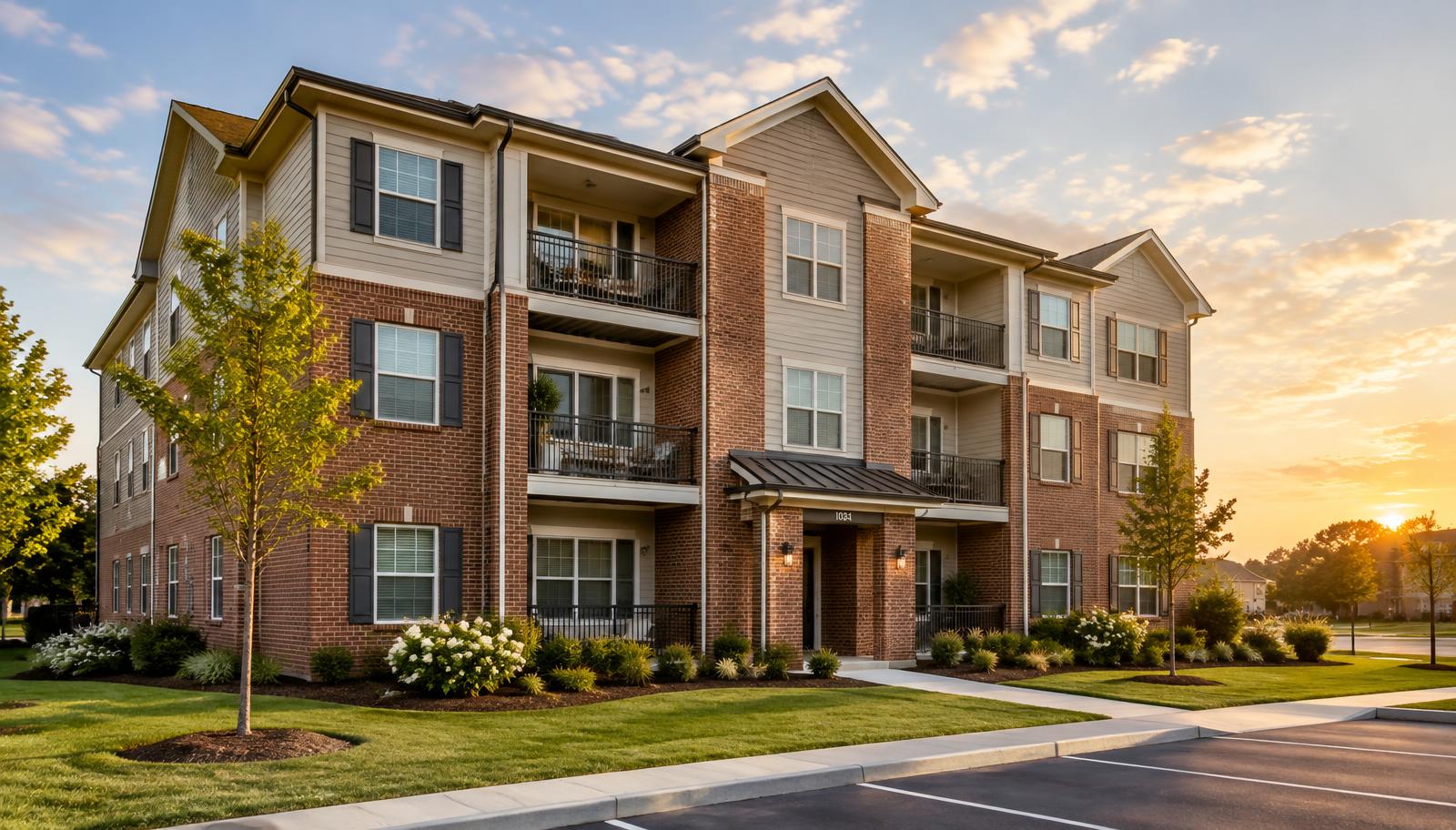
Scaling a multifamily portfolio past a handful of units changes everything about how you finance it. Conventional Fannie/Freddie guidelines cap out, bank credit committees want two years of operating statements, and traditional lenders start asking questions that have nothing to do with whether the property pays for itself. DSCR loans exist precisely to solve that problem — and for large scale multifamily investment property loans, they're often the most efficient path from contract to close.
This article covers how DSCR qualification actually works for 2–8 unit properties, what the math looks like at scale, where lenders differ significantly on large deals, and how working with a multi-lender broker changes your outcomes.
What "Large Scale" Means in DSCR Lending
In the DSCR world, lender programs split along a hard line: 1–4 units versus 5+ units. Most residential DSCR programs cover 1–4 unit properties and treat them as single-family investment loans. Properties from 5 units upward typically fall into commercial territory with different documentation, different loan-to-value ceilings, and different rate structures.
For this article, "large scale" covers two overlapping categories:
- 2–8 unit residential multifamily (duplexes, triplexes, fourplexes, up to small apartment buildings) — covered under many DSCR residential programs
- Portfolio plays — multiple properties collateralized together under a blanket or portfolio loan structure
Both require the same foundational analysis: does the income from the property (or portfolio) cover the debt service? That question is answered with one ratio.
The DSCR Formula, Applied to Multifamily
DSCR stands for Debt Service Coverage Ratio. The formula is simple:
DSCR = Gross Rental Income ÷ Total Debt Service (PITIA)
Where PITIA = Principal + Interest + Taxes + Insurance + Association dues (if applicable).
Real Example: 6-Unit Building
Assume you're acquiring a six-unit building in Atlanta. Each unit rents for $1,400/month.
- Gross monthly rent: 6 × $1,400 = $8,400
- Annual gross rent: $8,400 × 12 = $100,800
- Annual PITIA (loan payment + taxes + insurance): $82,000
DSCR = $100,800 ÷ $82,000 = 1.23
A DSCR of 1.23 means the property generates 23% more income than it costs to carry. Most lenders require a minimum DSCR between 1.10 and 1.25 for approval. Some programs go as low as 1.0 (break-even). A few specialty programs — including no-ratio products — allow qualification below 1.0 for strong-asset borrowers.
The income figure used varies by lender. Some use actual leases. Others use market rent from an appraiser's rent schedule (form 1007 or 1025). On a large multifamily acquisition, which income figure the lender accepts can swing your DSCR by 0.15–0.30 — enough to make or break approval.
Key Underwriting Variables at Scale
Large multifamily DSCR loans introduce complexity that doesn't exist on a single-family rental. Here's where lenders differ most:
Vacancy Factor
Some lenders apply an automatic vacancy haircut — typically 5–10% — to gross rents before calculating DSCR. Others use gross rent as stated. On a $100,800 gross rent property, a 10% vacancy adjustment reduces income to $90,720, which drops your DSCR from 1.23 to 1.11. That's still above most minimums, but it shrinks your margin.
Unit Count Limits Per Program
Residential DSCR programs cap out differently. Some stop at 4 units. Many go to 8. A few extend further. Assuming your lender covers the unit count you need — without verifying — is a common and expensive mistake. Confirm this before submitting.
Loan Size Minimums and Maximums
Standard DSCR programs often have a floor around $75,000–$100,000 and a ceiling of $3–5 million. Large portfolio acquisitions or high-value urban multifamily deals can exceed those caps. Specialty high-balance programs exist but require lender-specific qualification.
Experience Requirements
Some programs require prior landlord experience for 5+ unit financing. Others don't care, especially if the DSCR is strong and LTV is conservative. Knowing which lenders weight experience matters when you're a newer investor acquiring a larger building.
Prepayment Penalty Structure
Large acquisitions often involve long hold periods or refi exit strategies. DSCR loans typically have prepayment penalties — step-downs (5-4-3-2-1) or yield maintenance structures. The penalty structure affects your total cost of capital. This should be factored into underwriting, not treated as fine print.
Why Single-Program Lenders Are a Structural Problem at Scale
When you're buying a duplex with a 1.35 DSCR and 75% LTV, most lenders can say yes. The deal fits neatly into any standard box.
Large multifamily deals rarely fit standard boxes.
A direct lender has one program. Their guidelines are fixed. If your six-unit deal has a 1.18 DSCR and they require 1.25, the answer is no — regardless of your equity, asset quality, or track record. You then have to start over with a new lender and repeat the process.
An independent broker working across 100+ DSCR lenders doesn't have that problem. The deal goes to the programs where 1.18 DSCR on a six-unit qualifies. It doesn't get forced into an ill-fitting box; it gets matched to the lender whose specific program is designed for exactly that scenario.
At DSCR.capital, that's the entire model. Every large multifamily scenario gets evaluated across lenders, not presented to one and hoped for. That matters most precisely when your deal has any complexity — unit count, DSCR that's functional but not exceptional, foreign national ownership, mixed-use components, STR income on some units.
DSCR for Short-Term Rental Income in Multifamily
If your multifamily building has units operating as short-term rentals — or you're acquiring a property you intend to convert partially to STR — the income calculation changes. Market rent schedules don't capture STR premiums. Lenders that allow STR income use platforms like AirDNA for projected revenue, or require 12 months of actual platform income for existing operations.
Not all DSCR lenders accept STR income on multifamily. The ones that do often apply a higher haircut to that income stream than they would for long-term lease income. Structuring this correctly before submission — knowing which income a specific lender will credit — determines whether the deal pencils on paper.
Portfolio Loans: Financing Multiple Properties as One
If you already own several individual DSCR loans and want to pull equity across multiple assets simultaneously, or acquire several properties at once, a blanket portfolio loan consolidates them into a single note. This simplifies servicing, can improve your blended rate across assets, and enables cash-out against the portfolio's aggregate value rather than each property individually.
Portfolio DSCR loans underwrite the combined DSCR across all properties in the blanket. A property with a 0.95 DSCR can sit inside a portfolio that averages 1.30, and the portfolio still qualifies. Individual asset weakness gets offset by portfolio strength — something that's impossible when each property is financed separately.
For investors with 5–20 doors looking to consolidate and access capital, portfolio loans are frequently the most efficient structure available.
Frequently Asked Questions
What is the minimum DSCR required for a large multifamily loan?
Most residential DSCR programs require a minimum ratio between 1.10 and 1.25. Some programs allow 1.0 (break-even), particularly for experienced investors with low LTV. Specialty no-ratio programs exist for borrowers who need to qualify below 1.0, though these typically come with lower maximum LTV thresholds. The minimum varies by lender, unit count, property type, and borrower profile.
Can I use projected rents on a vacant multifamily property?
Yes, in many cases. Lenders typically rely on the appraiser's market rent analysis (Form 1025 for 2–4 units, or commercial appraisal for 5+) when a property is partially or fully vacant. Some lenders will also accept signed lease agreements for units not yet occupied but leased. The key is which income source the specific lender credits — this varies enough across programs that it's worth knowing before you choose a lender.
Do DSCR lenders care about my personal income for a large multifamily deal?
No. That's the defining feature of DSCR financing. Your personal W-2, tax returns, and self-employment income are not part of the qualification formula. The property's income-to-debt ratio is the primary underwriting criterion. Some lenders verify minimum liquid assets and pull credit, but your personal income doesn't factor into the approval decision.
How does LTV work on 5–8 unit DSCR loans?
Maximum LTV for 5–8 unit properties typically runs lower than for 1–4 unit residential deals. Where a single-family rental might qualify at 85% LTV, a six-unit building may cap at 70–75% depending on the lender and DSCR. Higher DSCR can sometimes unlock better LTV. Lower LTV often enables approval on deals with tighter debt service coverage. These two levers — DSCR and LTV — are always in dialogue with each other during underwriting.
Start With Your Scenario
Large scale multifamily investment property loans don't fit a single mold, and they shouldn't be submitted to a single lender. The difference between a structured deal and a declined one is often which program it went to — not whether the deal is fundable.
Submit your scenario at dscr.capital/review for a direct review across the programs most likely to close it.

Alex Seri
DSCR Lending Specialist · DSCR.Capital
I close DSCR loans every week for real estate investors nationwide. If you've got a deal, I want to hear about it.